
What happens between an idea and a solution?
There’s a process for that. The innovation process. It’s creative, analytical and fun, but also abstract, messy and deeply collaborative.
What happens between an idea and a solution? · 3 min read · 22 Nov 2025 · Anja Cimerman
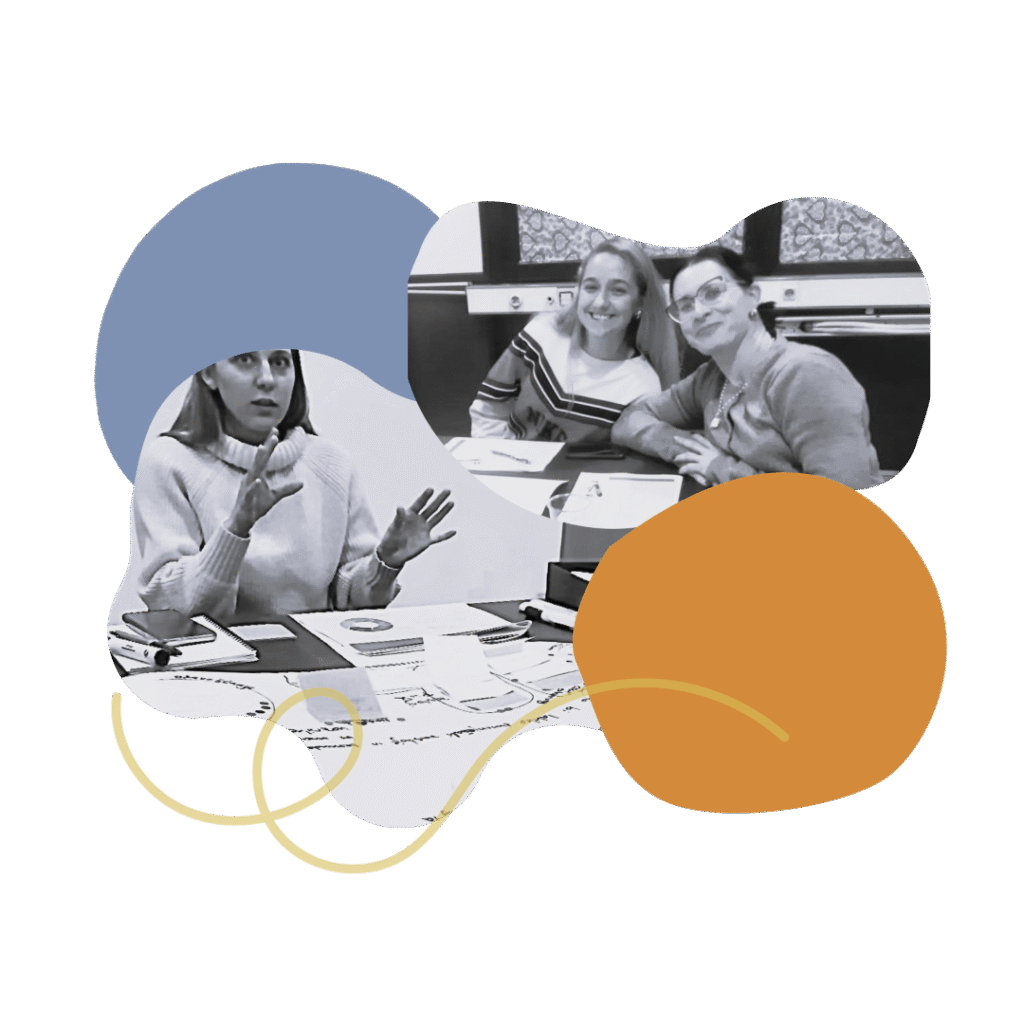
We ran several workshops over the last two months to explore what it actually feels like to move through the innovation process together.
The idea was simple: take participants through the process of turning an idea into a solution that creates real value not by explaining it as a theory, but by practising it together.
As we did this, we started noticing some patterns in how people respond to the process and in what makes it easier or harder to navigate.
One participant put it this way:
“I didn’t even know there was something I needed to know until you pointed it out. Thank you.”
– Ana

What we observed
- The innovation process felt less intuitive than we expected.
- We are used to responding to a problem by immediately looking for a solution, so spending time understanding the situation first can feel counterintuitive.
- Working through the process together made it easier to see why understanding needs and perspectives comes before developing solutions.
- The structure of the process can feel abstract when you are learning it for the first time.
- We noticed that we have relatively few spaces where we can actually practise this way of thinking and working, rather than just learn about the methods

What we learned
- Innovation is not simply about generating good ideas. It is a process of exploring, understanding, creating, testing and learning.
- The process can feel uncomfortable precisely because it asks us to delay the urge to solve.
- Having a framework helps make an otherwise abstract process more tangible.
- Practising the process matters — understanding a method intellectually is different from experiencing how the different parts connect.
- Working collaboratively changes the process: different perspectives can make the problem, the ideas and even the direction of the solution evolve.
What we are trying next
We want to keep creating spaces where people can practise innovation thinking rather than just learn about it. We are particularly interested in making the process feel less abstract and more accessible through real challenges, experimentation and reflection — and in exploring what helps people become more comfortable with not having the answer straight away.
About this lab
The Collaborative Problem Solving Lab explores how diverse people can come together to understand complex challenges, ask better questions, co-create ideas, and test human-centred solutions.